
Your previous qualification
Which board or university, which year, which subjects, and whether the qualification was completed or left partway. This is the single biggest factor.
Many students take a break from education because of work, family responsibilities, financial circumstances, personal reasons or other situations. A study gap does not automatically mean the end of your education journey.
Eligibility after a break depends on four things, and none of them is the length of the gap alone.
Which board or university, which year, which subjects, and whether the qualification was completed or left partway. This is the single biggest factor.
Work, family responsibility, finances, health or relocation. Some institutions simply ask you to declare it; others have year-of-passing conditions.
Every university, board and institute publishes eligibility criteria. What one closes, another often keeps open — particularly in open and distance modes.
A government-job aspirant, a working professional seeking promotion and a student wanting a technical skill need three different routes, even with the same marksheet.
Many students take a break from education because of work, family responsibilities, financial circumstances, personal reasons or other situations. A study gap does not automatically mean the end of your education journey.
What it does mean is that your options need to be checked properly — because eligibility after a gap depends on your previous qualification, the year you passed, the course you want and the admission rules of the concerned institution. Some routes stay open for years. Some require a specific mode of study. A few genuinely close, and we will tell you that too.
If one of these sounds like you, there is almost certainly something worth discussing.
Open-school senior secondary, then a degree or a diploma. Subjects already passed can often be carried forward instead of repeated.
Recognised open-university and distance degree programmes usually remain open. Regular on-campus entry may be restricted by year of passing.
Options include re-registration where the university allows it, credit transfer in some cases, or a fresh start in a distance programme. Your old records decide which.
Distance or open-mode BA, B.Com or BBA, or a PG programme if you are already a graduate — chosen so the exam schedule fits your job.
Lateral entry into a polytechnic diploma, and later into B.Tech, is a well-established route for ITI holders.
Usually handled with a simple, truthful gap declaration. We tell you exactly what the institution needs and how to prepare it properly.
Some institutions ask a returning student to declare the period of the gap — commonly through a simple self-declaration or a notarised affidavit stating what you were doing. Many institutions ask for nothing at all. It depends entirely on the programme and the institution.
Where a declaration is required, we tell you what it must contain, how it should be attested and where it is submitted. Where it is not required, we tell you that too, so you do not pay anyone for a document you never needed.
We will not help draft a statement that misrepresents your employment, study or dates, and we do not arrange backdated documents. A false declaration discovered later can cancel an admission or a qualification outright.
Missing documents are common after a long gap. Come with whatever you have — part of our job is telling you which records can be recovered and from where.
The information material we use in counselling — on restarting after a break, clearing a gap properly and completing an unfinished qualification.
 View full poster
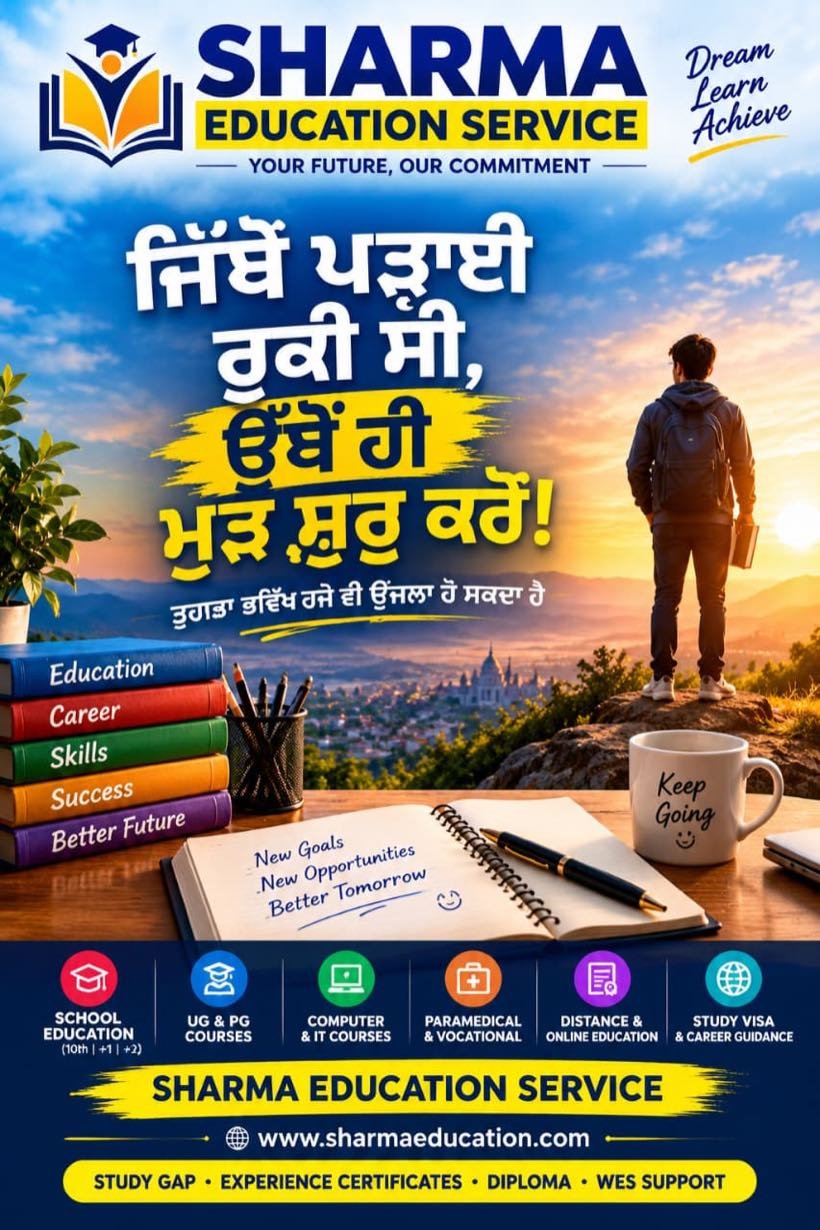
ਜਿੱਥੇ ਪੜ੍ਹਾਈ ਰੁਕੀ ਸੀ, ਉੱਥੋਂ ਹੀ ਮੁੜ ਸ਼ੁਰੂ ਕਰੋ — education, career, skills and a better future are still open to you.
ENQUIRE ON WHATSAPP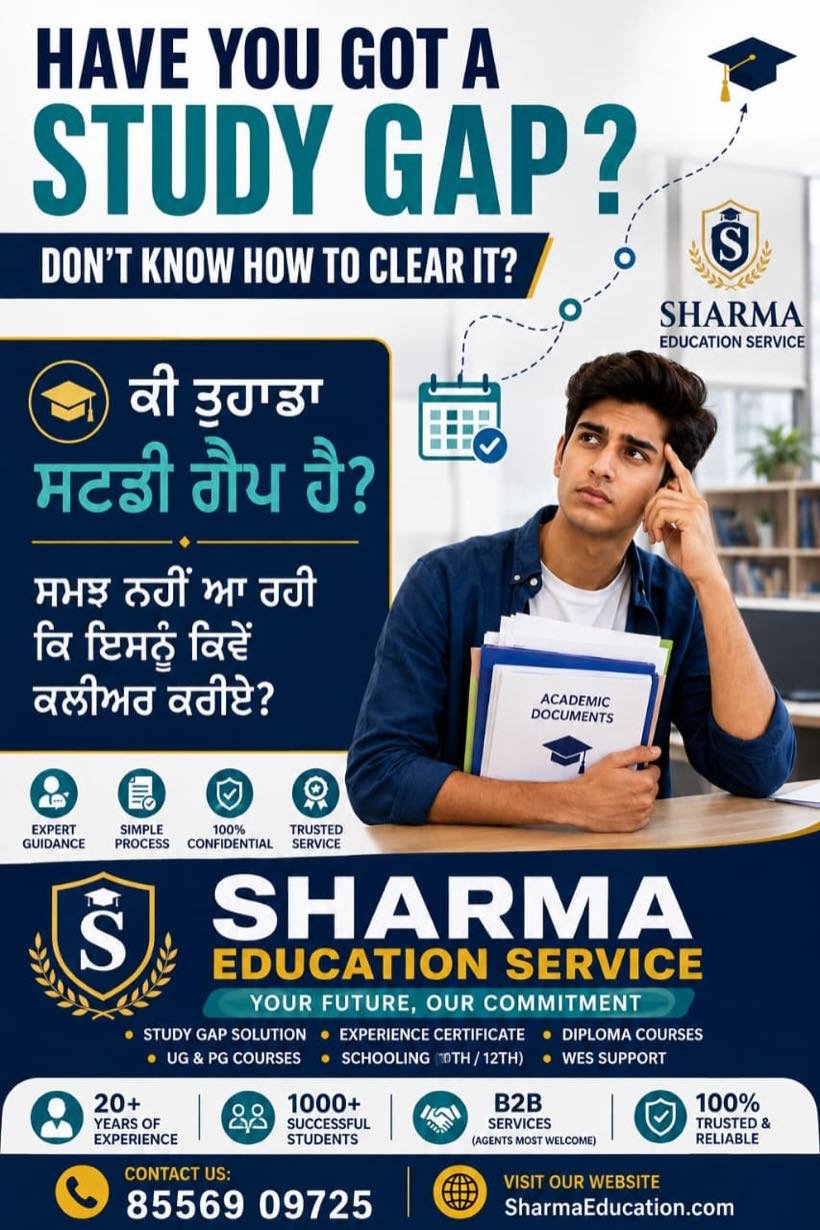 View full poster
Not sure how to clear it? Expert guidance, a simple process and confidential counselling on your options.
ENQUIRE ON WHATSAPP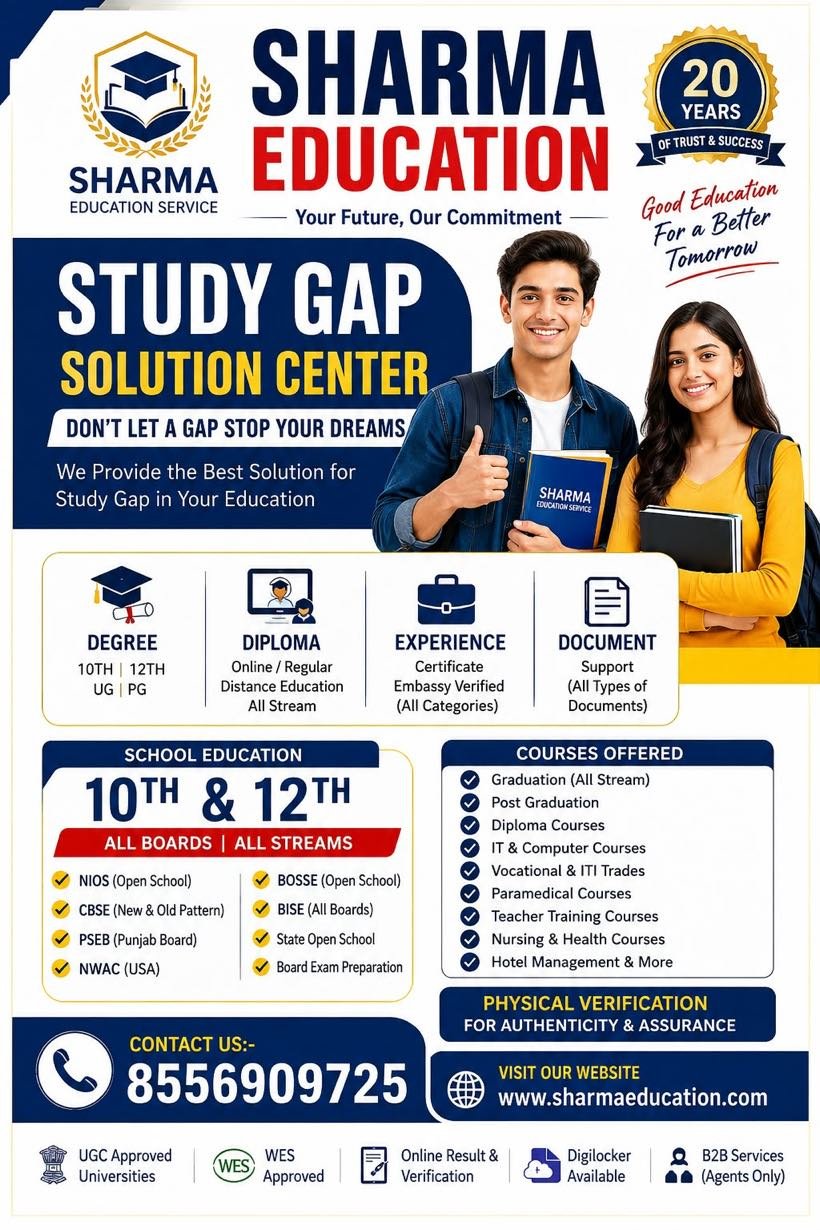 View full poster
Degree, diploma and school-education routes for 10th, 12th, UG and PG — with proper documentation support.
ENQUIRE ON WHATSAPP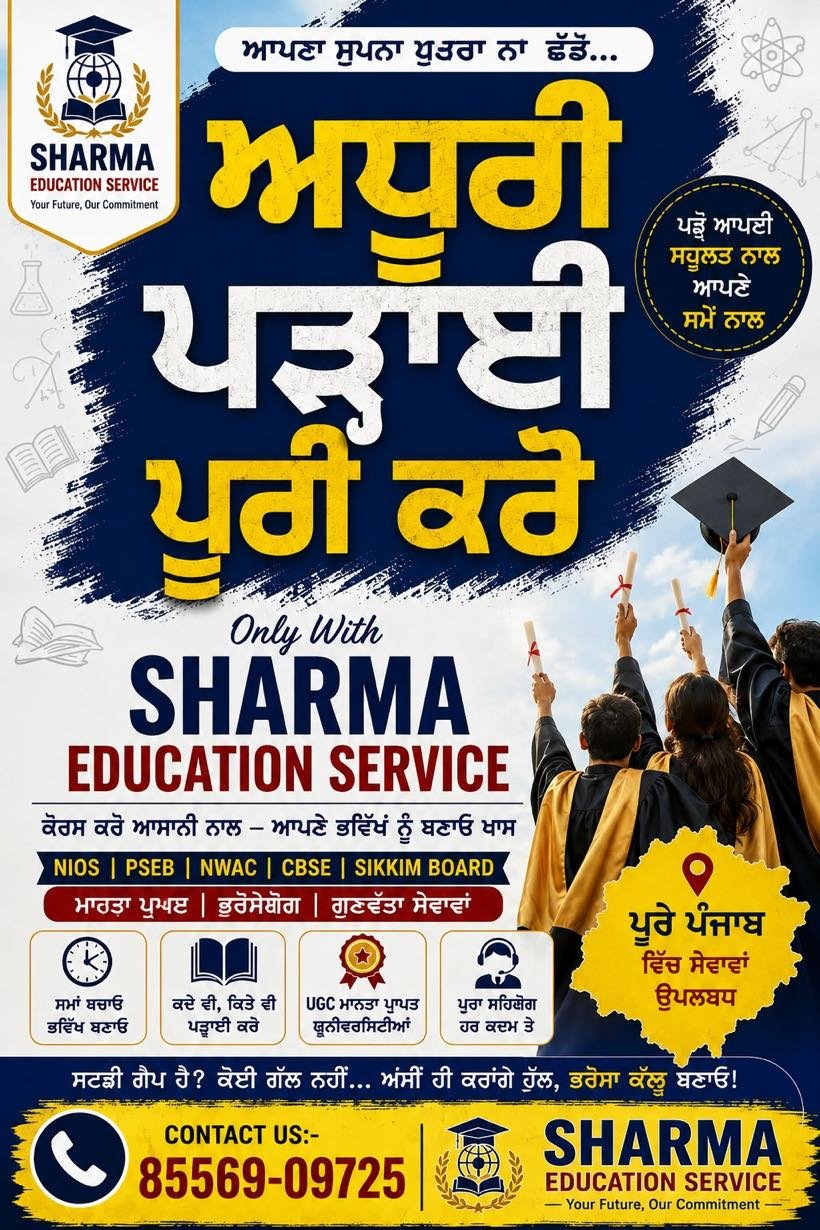 View full poster
ਅਧੂਰੀ ਪੜ੍ਹਾਈ ਪੂਰੀ ਕਰੋ — study whenever and wherever suits you, through recognised boards and universities.
ENQUIRE ON WHATSAPP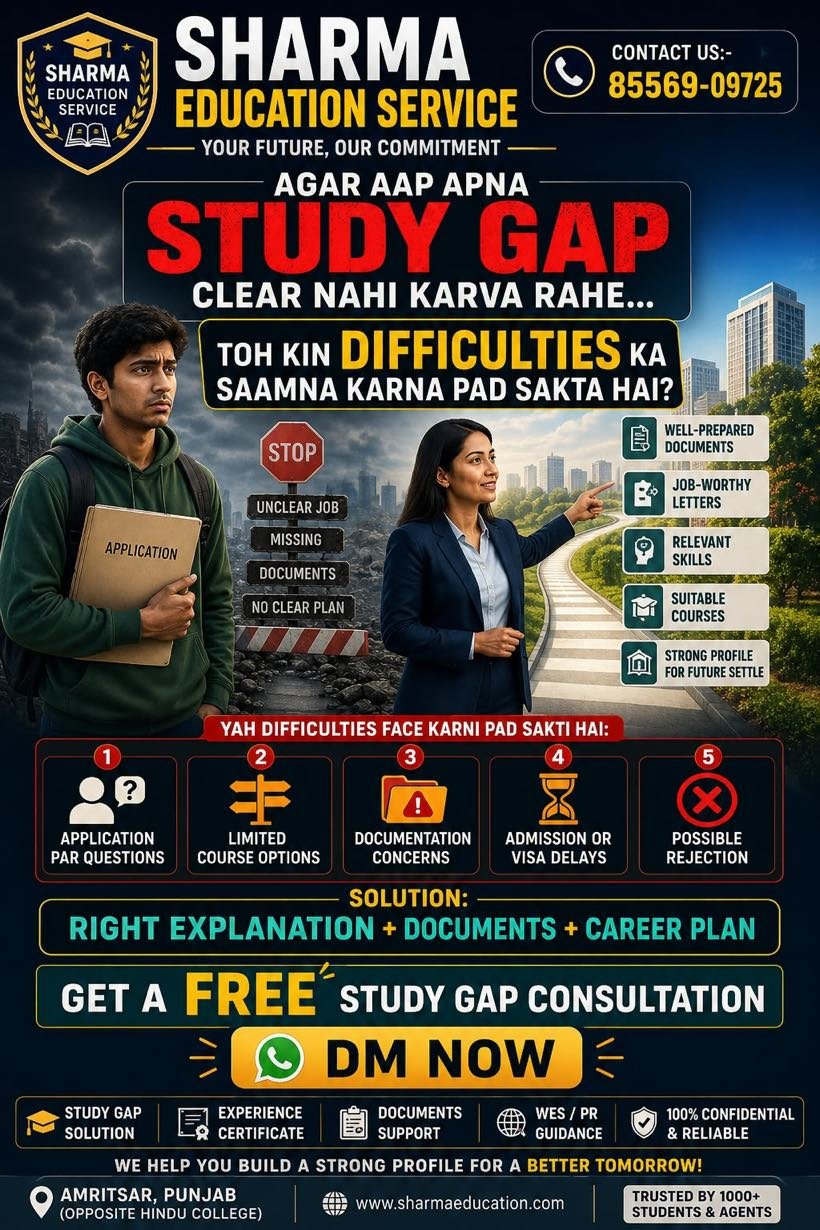 View full poster
Questions on applications, limited course options, documentation concerns, delays and rejections — and how the right plan prevents them.
ENQUIRE ON WHATSAPPThese posters are our own information material. Course availability, eligibility, recognition and fees always remain subject to the rules of the concerned university, board or institute.
Straight answers about study gaps, eligibility, recognition and the admission process.
In most cases, yes. A gap in education is common in India and a large number of universities, open universities and boards accept students returning after a break. What changes with a longer gap is which routes are open to you — a regular on-campus programme may have age or year-of-passing conditions, while recognised open and distance modes are usually more flexible.
The honest answer depends on your last qualification, your passing year and the specific institution's rules. That is exactly what we check in the free counselling session before recommending anything.
Some institutions ask for a gap declaration or an affidavit stating what you were doing during the break; many do not ask at all. It depends on the institution and the programme. If it is required, we will tell you exactly what the document should say and how it should be prepared and attested.
We assist with genuine declarations only. We do not prepare false statements about employment, study or dates.
A degree from a university whose distance or open-mode programme is recognised by the appropriate regulatory authority is a valid qualification, and is widely accepted for higher studies and for many employment purposes. However, recognition is programme-specific and changes over time, and certain professional or technical fields have restrictions on distance mode.
We will tell you the recognition position of the specific programme you are considering, and where it can and cannot be used — before you pay any fee.
Yes. Open-school routes exist precisely for learners who left the formal system, and they allow you to complete secondary or senior-secondary education as a private/open candidate. There are admission windows, subject rules and, in some cases, credit-transfer provisions for subjects you have already passed.
Bring your old marksheets — even partial ones — to the counselling session. They often unlock a shorter route than starting again.
ITI programmes are trade-focused, usually one to two years after 10th, and lead to NCVT/SCVT certification in a specific skill such as electrician, fitter or COPA. Polytechnic diplomas are typically three-year engineering programmes after 10th (or lateral entry after ITI) and can lead to a B.Tech through lateral entry. A degree is a three-to-four-year university qualification after 12th.
Which one is right depends on how quickly you need to start earning, what you want to do long term and what your marks allow.
The initial counselling conversation is free — on the phone, on WhatsApp or in our office. If you decide to proceed and want our assistance with the application and documentation process, we explain our assistance charges clearly and in advance.
Course fees are always paid to the university, board or institute through their official channels. We tell you the institution's published fee structure so you can budget properly.
Fill in the form and a counsellor will get back to you with genuine options for your qualification and study gap. If you prefer to talk first, call or WhatsApp us — that works just as well.
That is genuinely all we need to start. You will get a realistic answer about what is open to you — not a sales pitch.